
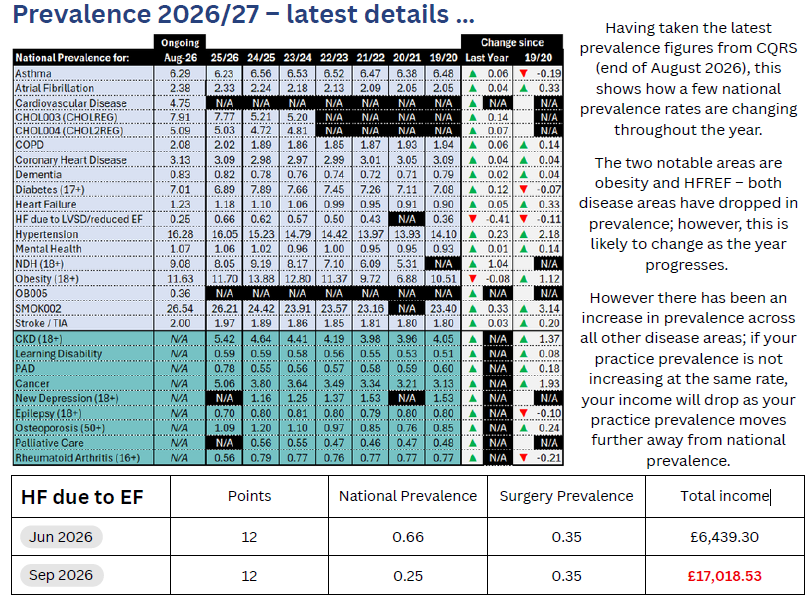
The increase in prevalence is largely due to changes to the Heart Failure with Reduced Ejection Fraction (HFREF)
register. Prevalence for this register has dropped significantly compared with previous years. This was always
expected, as the new HFREF register is more specific than the previous Heart Failure due to LVSD register. However,
the reduction is also being influenced by practices not yet having reviewed all patients who may now be eligible for
inclusion. As practices continue to review and correctly code eligible patients, we would expect HFREF prevalence
to increase slightly throughout the year. For the practice in this example, reviewing their HFREF population and
identifying the appropriate patients has increased their projected QOF income by almost £11,000.
Obesity is another area where prevalence is likely to fluctuate throughout the year. In this example, the practice has
increased its obesity prevalence since June 2026, resulting in an increase in projected income of approximately
£5,000. Their total income associated with the 18 obesity points is now £20,753.65.
The obesity register has been split this year, so national prevalence relating to OB004 has initially reduced.
However, this is a register that is likely to grow as the year progresses as more eligible patients are identified and
coded. With more than £20,000 of income associated across the two obesity indicators for this practice, it is well
worth keeping a close eye on obesity prevalence throughout the year.
Do you have any questions around prevalence? Do you have any concerns about your practice prevalence and
accuracy of your disease registers? If you do, contact us, we are happy to chat through any queries you may have.
This is one topic we weirdly love talking about, please don’t judge us …!